

Litha
The Crown of Light ❊ Summer Solstice

The Sun stands at its highest point in the sky.
The fields are green. The roses are open. The bees are busy with their sacred work. Life spills over its edges in every direction.
Litha, the Summer Solstice, marks the longest day and shortest night of the year in the Northern Hemisphere. It is a celebration of abundance, vitality, beauty, and illumination—a moment when the solar force reaches its peak expression.
Yet hidden within the brightness is an ancient mystery:
The wheel has already begun to turn.
The Sun King stands crowned in gold, but from this day forward the light will slowly begin its return toward darkness. The seeds planted at Imbolc, tended at Ostara, and blessed at Beltane have become visible. What has grown can now be witnessed.
Litha invites us to pause.
To notice what is flourishing.
To acknowledge what has come into bloom.
To offer gratitude before the harvest season begins.
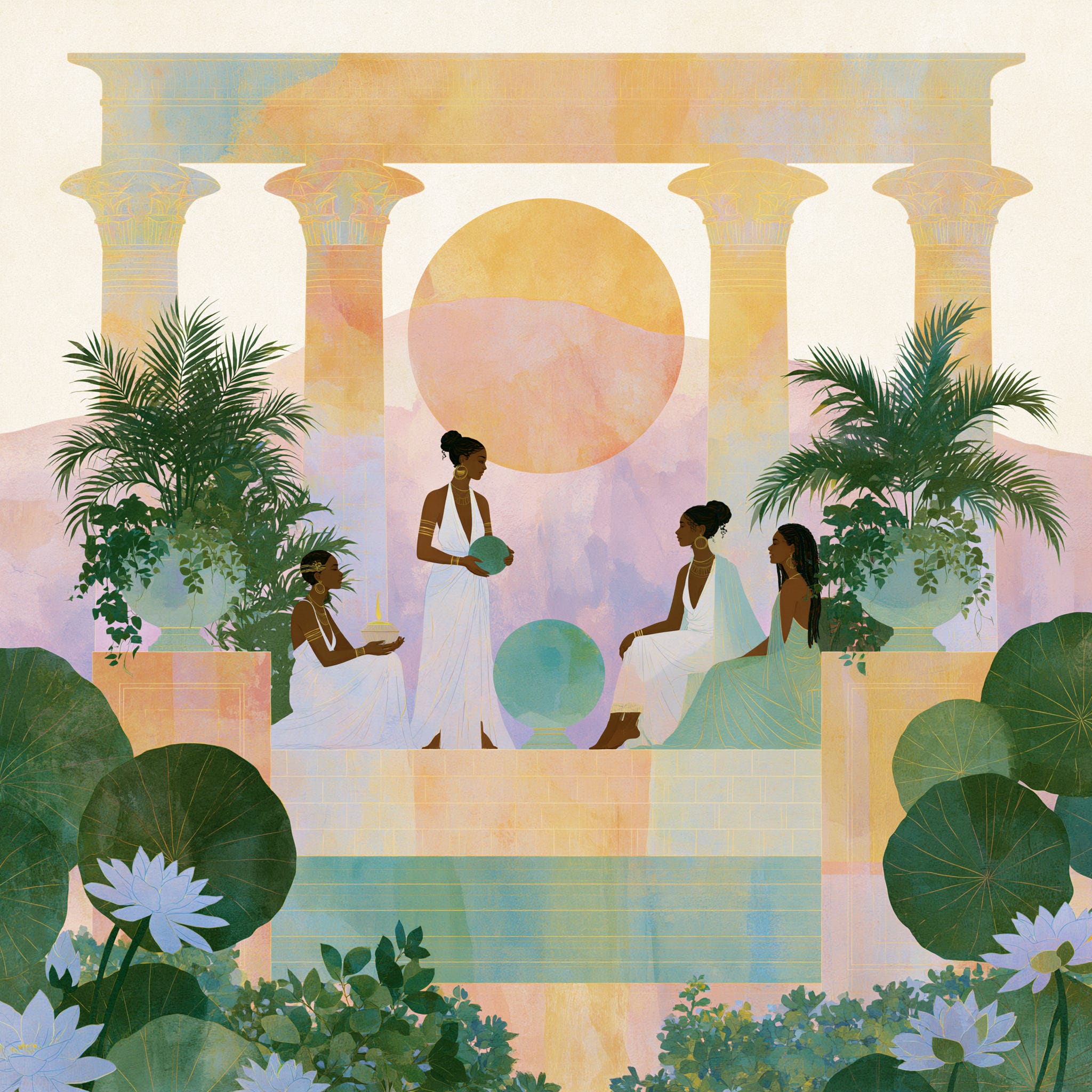
The Goddess at Midsummer
…and she dances and spins toward summer, to the beat of her passion’s drum…
This holy day honors the mysteries and passions of Aphrodite, Goddess of Love. The goddess has been born and grown to womanhood, and now encounters her Divine Lover. She undergoes the death and rebirth of self that occurs when merging with another. She is impregnated or made fertile with future creations, be they flesh or spirit, human or divine, political, practical, artistic or social.
This fertilization can be seen as self-made, community-made, or mutually created by the Lovers. Her love can be a woman, a man, herself, her work, or the Goddess.
Loving couples or groups may wish to have special blessings today. This is a time of ecstasy and surrender.
Even as the sexual tides of our bodies rise and fall, so do the larger life tides of magnetic energy caused by the interplay of darkness and light. Aligning ourselves with energy waves—sexual, lunar, earthly, solar, magnetic, and so on— this is what ritual is all about.

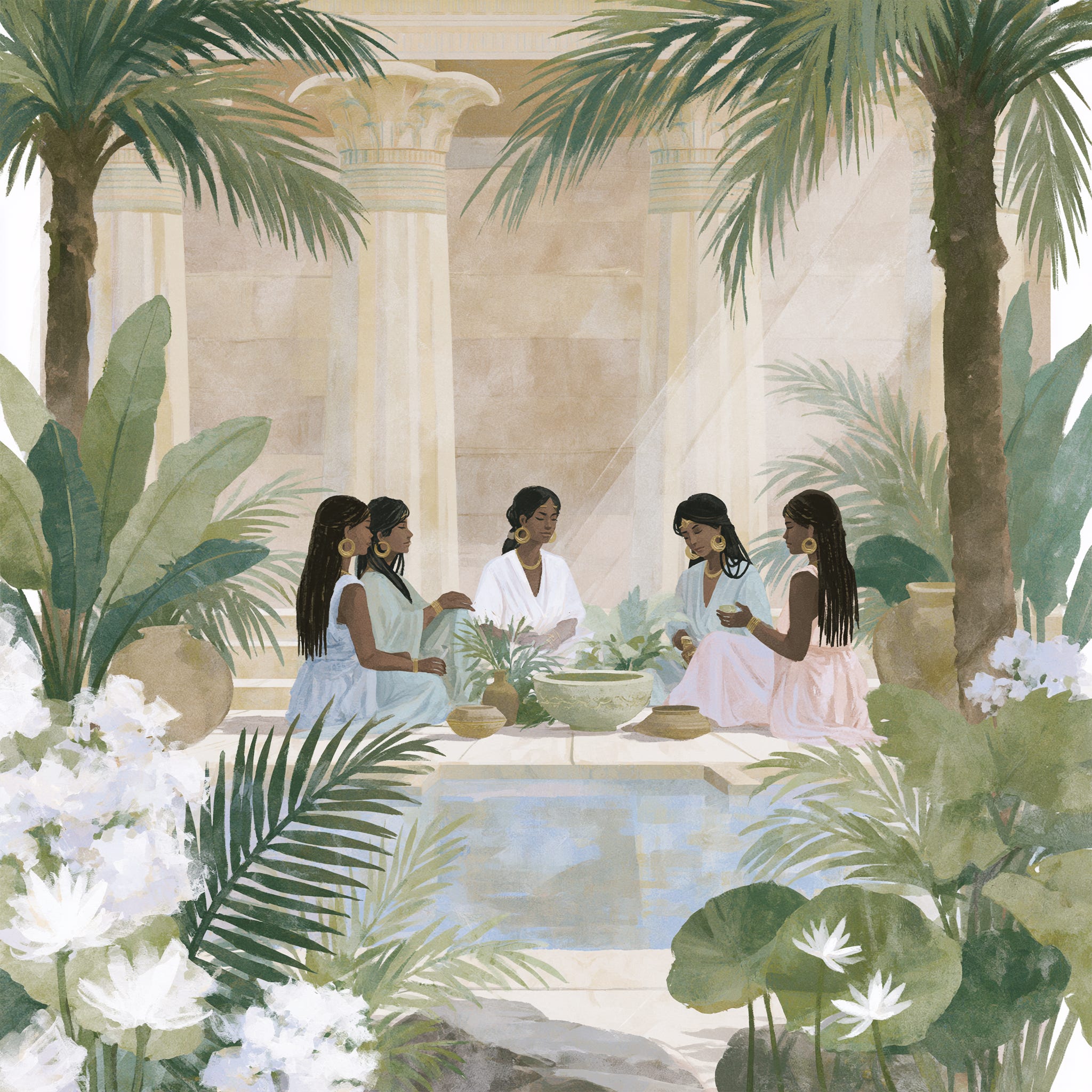
Things to Consider
What has come into bloom since the Winter Solstice?
What am I proud of cultivating this year?
What blessings have I overlooked?
Where am I being asked to receive rather than strive?
What in my life feels ready for renewal?
What would happen if I trusted the flood?
What wants to emerge after the waters recede?
The Coming Waters
In the ancient Nile Valley, this solar threshold carried another significance.
As the Sun reached its height, attention turned toward the horizon and the rising of Sirius, Sopdet, whose appearance announced the coming inundation.
Soon the waters would arrive.
The Nile would overflow its banks.
Fields would disappear beneath fertile floodwaters.
Paths would vanish.
Boundaries would soften.
What seemed stable would surrender to the wisdom of the river.
This marked the beginning of Akhet, the Season of Inundation—the first season of the Kemetic year.
At first glance, inundation appears destructive.
Yet the flood was life itself.
Without it there would be no harvest.
No grain.
No civilization.
The waters arrived not to destroy the land, but to renew it.
As we approach Akhet, we are reminded that life does not move in straight lines.
After growth comes surrender.
After abundance comes release.
After certainty comes mystery.
The flood asks:
What am I being asked to let go of control over?
What wants to be softened?
What wants to be renewed?
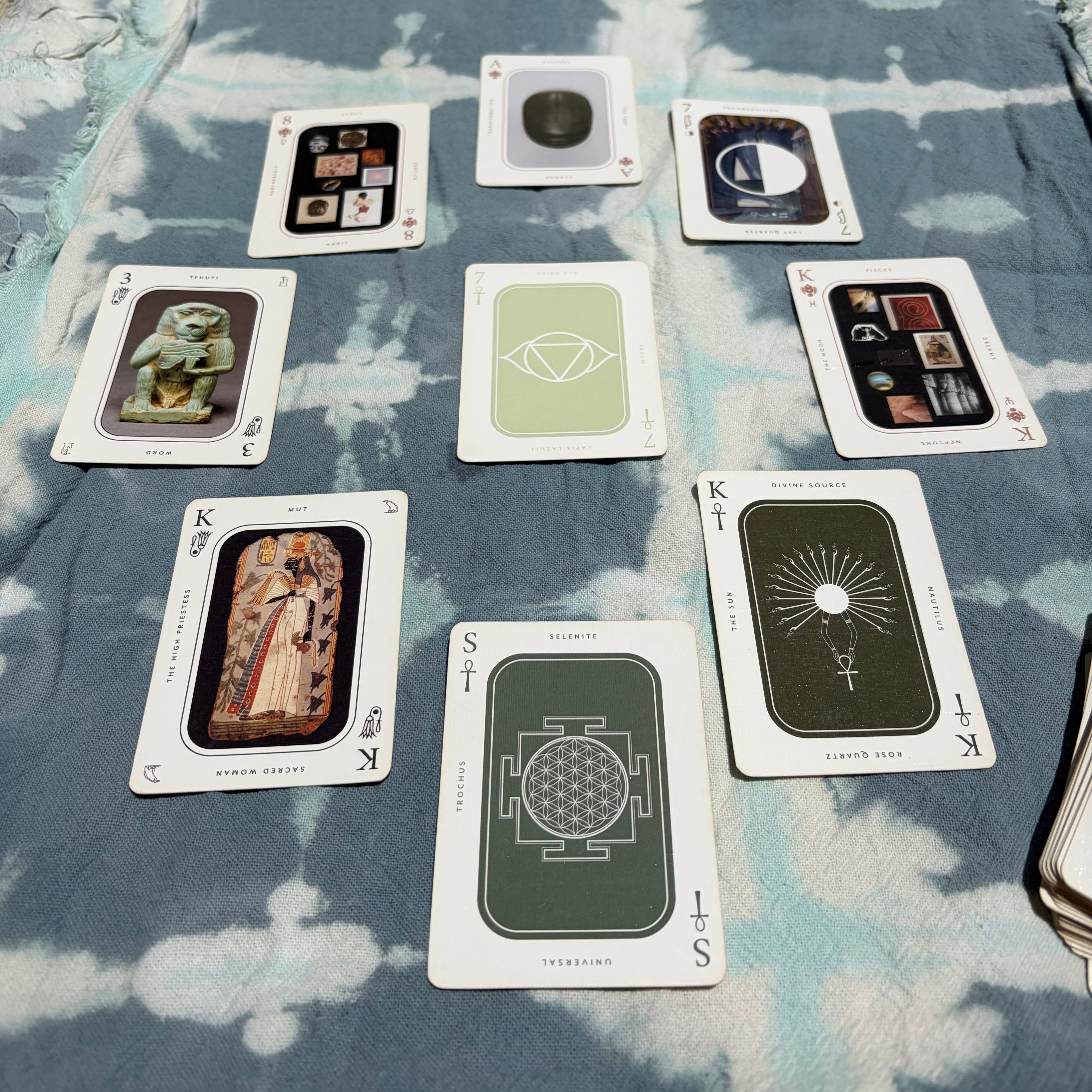
At Yule, we honored the spark.
At Imbolc, the stirring.
At Ostara, the first green shoots.
At Beltane, the fire of becoming.
At Litha, we arrive at fullness.
This is the season of standing beneath the Sun and witnessing what has come into bloom.
Not what may bloom.
Not what should bloom.
What already has.
Litha asks us to pause long enough to see our own growth.
The medicine of this season is gratitude.
𓆸𓆸𓆸
Travel the Wheel:
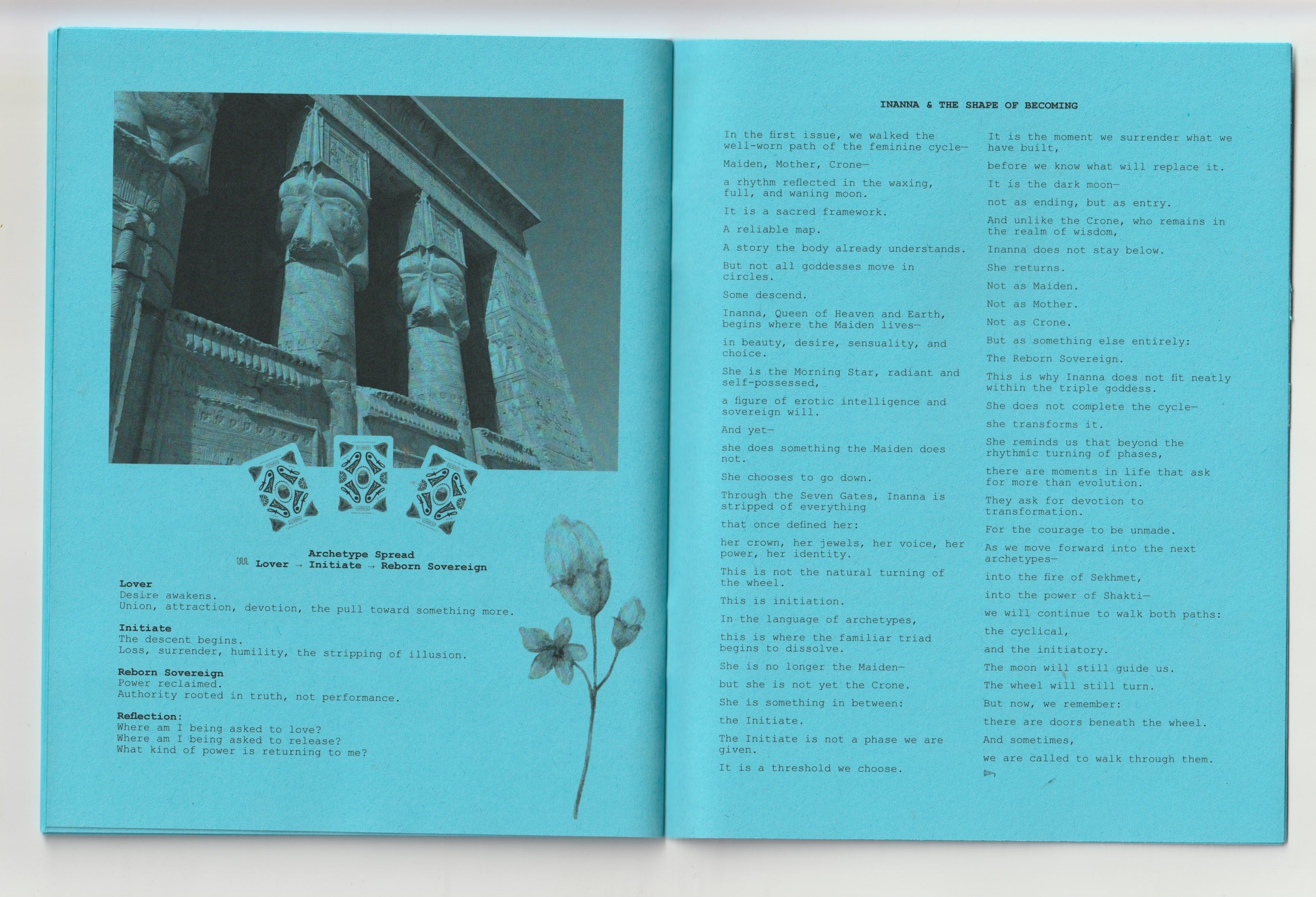
Beltane brought us Inanna, now Sekhmet is preparing to come forth.
Until Lammas…
tua ntr
𓆸